









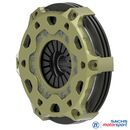
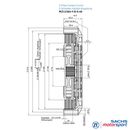
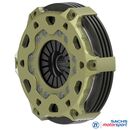
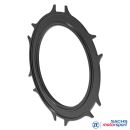
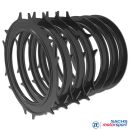
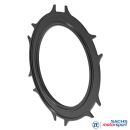
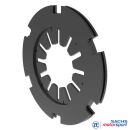
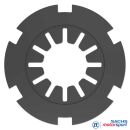
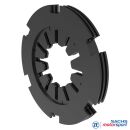
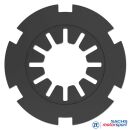
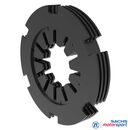
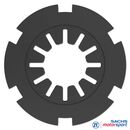
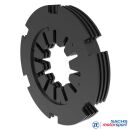
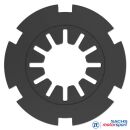
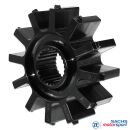

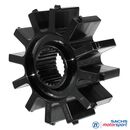

SACHS RCC 184 carbon clutch
The SACHS RCC 184 carbon clutch from ZF-Motorsport is a highly durable 184 mm clutch system for professional motorsport drivetrains. The series combines very low rotating mass, high thermal load capacity, direct torque transfer and an exceptionally stable friction characteristic. Typical applications include GT cars, prototypes, touring cars, endurance racing vehicles and high-performance racing projects with sequential or dog-engagement gearboxes.
This category contains SACHS RCC 184 racing clutches with a carbon friction system. The carbon/carbon friction pairing is designed for high disc temperatures, very low inertia and reproducible torque transfer. Compared with sintered pad or sintered metal versions, the carbon clutch offers particularly high temperature reserves, very fast response and service-friendly wear compensation using carbon packs, base plates, pressure rings and shim kits.
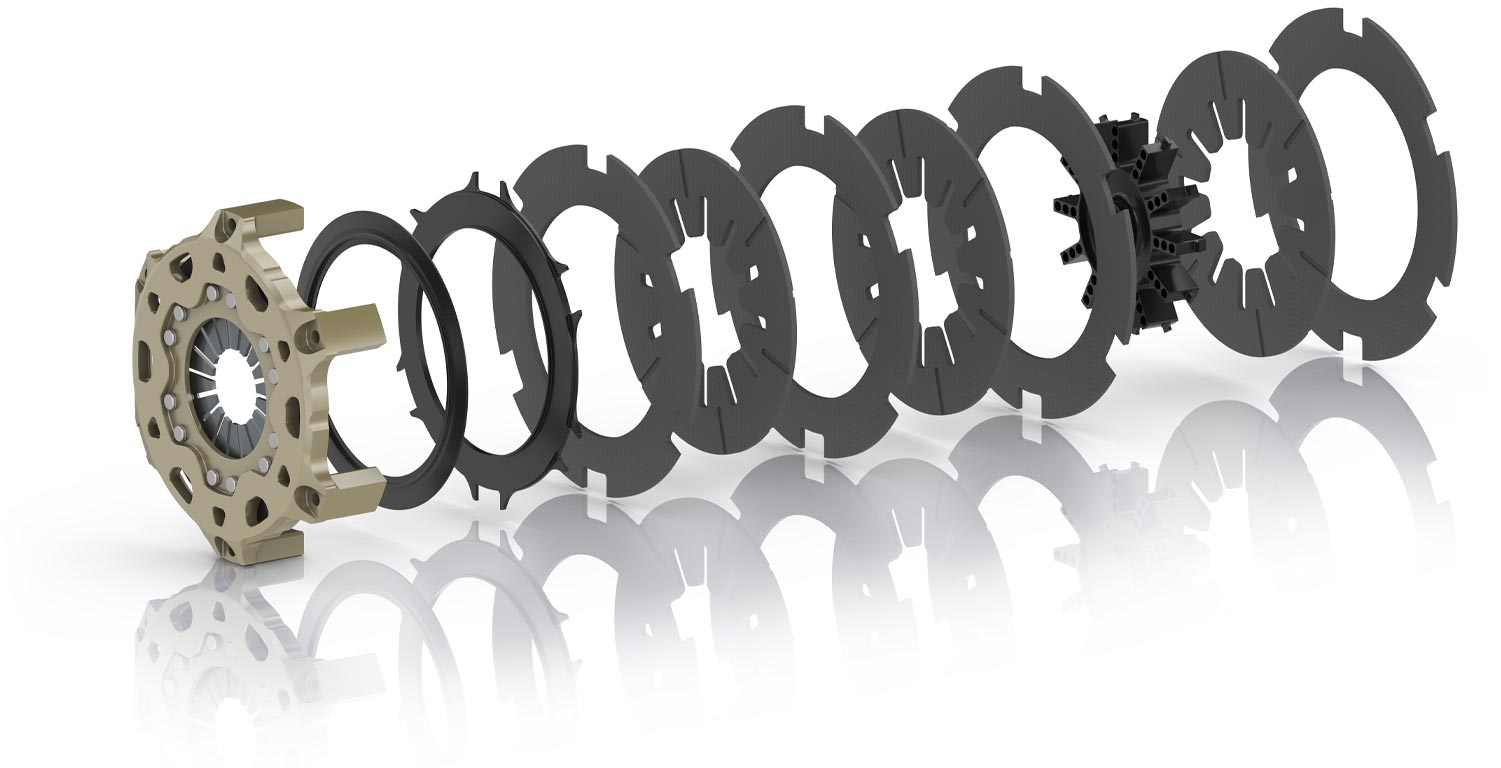
Technical variants of the RCC 184 carbon series
The variants differ mainly in the number of carbon drive plates, transmissible torque capacity and thermal reserve. More friction discs increase the effective friction area and enable higher torque transfer in a compact 184 mm design. At the same time, the carbon clutch remains particularly responsive thanks to its very low moment of inertia.
| Version | Torque capacity | Design | Technical classification |
|---|---|---|---|
| SACHS RCC 2/184-Y Carbon | 820 Nm | Twin-plate carbon clutch with 184 mm diameter | Very low inertia, high temperature reserve and direct torque transfer |
| SACHS RCC 3/184-Y Carbon | 1,240 Nm | Triple-plate carbon clutch with 184 mm diameter | More friction area and higher torque capacity for very high motorsport loads |
Carbon friction system for maximum thermal load capacity
In the RCC 184, the clutch works with carbon drive plates and carbon pressure plates. This carbon/carbon friction pairing is designed for high disc temperatures, long load cycles and repeated motorsport starts. The low density of the carbon material reduces rotating mass, while its good thermal conductivity helps stabilise the temperature of the clutch pack quickly under load.
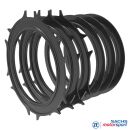
A particular advantage of the RCC 184 carbon clutch is its service-friendly wear compensation. Carbon packs, base plates, pressure rings and shim kits make it possible to bring the carbon stack thickness, installation height and spring geometry back into the target range. As a result, pedal feel, release behaviour and torque capacity remain reproducible throughout the maintenance cycle.
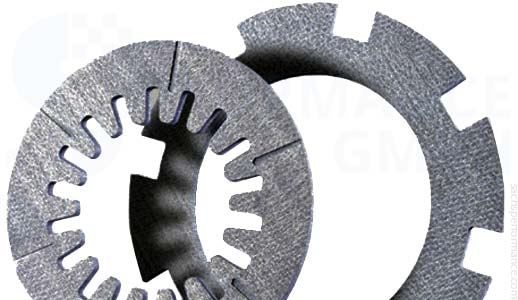
Complete clutches, carbon packs and shim kits for SACHS RCC 184
This category includes complete SACHS RCC 184 carbon clutches as well as matching spare and service components for maintenance, overhaul and rebuild. These include carbon packs, carbon drive plates, carbon pressure plates, base plates, pressure rings, shim kits, clutch hubs, clutch covers and further components of the modular RCC system.
In motorsport use, the carbon stack thickness is checked regularly depending on running time, thermal load and wear condition. With suitable carbon packs and shim kits, the clutch can be reset precisely to the correct installation height. This extends the service life of the clutch unit and supports consistent disengagement behaviour, controlled release travel and stable clamping force.
Advantages of the RCC 184 carbon clutch
The SACHS RCC 184 carbon clutch combines high torque capacity with very low rotating mass and maximum thermal reserve. The carbon friction system is designed for racing cars where fast shifts, consistent performance and low inertia are decisive.
Carbon/carbon friction pairing for high disc temperatures and consistent friction performance.
Compact size with high torque capacity and very low inertia.
High torque capacity for powerful motorsport drivetrains.
Supports fast engine speed changes, short shift times and spontaneous power delivery.
Carbon packs, base plates, pressure rings and shim kits for targeted wear compensation.
Proven motorsport technology with documented installation height, release characteristics and carbon stack thickness.
Applications
The RCC 184 carbon clutch is suitable for motorsport applications where high temperature stability, low rotating mass and reproducible torque transfer must be combined. The carbon friction lining is particularly relevant for vehicles with high power density, fast shift processes and long load cycles.
- GT and touring cars: high thermal reserve, stable friction performance and service-friendly design
- Prototypes & formula cars: low inertia, compact installation space and very fast response
- Endurance racing: consistent disengagement behaviour and targeted wear compensation across maintenance intervals
- Sprint racing: direct torque transfer, short shift windows and high torque capacity
- Professional racing projects: carbon clutch for the highest demands on weight, temperature window and performance
Carbon, sintered pad, sintered metal or organic: technical classification
The choice of friction material influences response, temperature resistance, wear behaviour and drivetrain load. Organic is the easiest to modulate and gentlest on the drivetrain, sintered pad offers direct torque transfer with good wear volume, and sintered metal is light and very responsive. Carbon is the high-performance option for very high temperature windows, minimum inertia and consistent friction performance under extreme load.
The SACHS RCC 184 carbon clutch is therefore a suitable technical choice when maximum performance, low rotating mass and high thermal load capacity are the priorities. For applications with lower thermal load or higher comfort requirements, an RCS version with organic, sintered pad or sintered metal friction material may be more appropriate depending on the application profile.
Technical selection: torque, carbon stack thickness and hub profile
Maximum engine torque, thermal load, application and the planned maintenance concept are decisive when selecting the right SACHS RCC 184 carbon clutch. The stated transmissible torque describes the maximum transmissible engine torque of the respective version without an additional safety margin. Depending on vehicle weight, tyre grip, gearing, launch load, temperature development and load duration, the clutch should be sufficiently dimensioned or deliberately oversized.
With carbon clutches, carbon stack thickness is particularly important in addition to torque capacity. Wear changes stack height, spring geometry and release characteristics. With suitable carbon packs, base plates, pressure rings and shim kits, the clutch can be brought back to the correct installation height. This supports consistent clamping force, clean disengagement behaviour and a long service life.
In addition to carbon stack thickness and torque capacity, flywheel, release system, release travel, installation height and the correct hub profile for the gearbox input shaft are decisive. The RCC 184 carbon clutches are designed for stepped flywheels and are available with different hub profiles. Only when these parameters match the entire drivetrain precisely will torque transfer, disengagement behaviour and durability function reliably.
Frequently asked questions about the SACHS RCC 184 carbon clutch
Which RCC 184 carbon clutches are available in this category?
This category contains SACHS RCC 184 carbon clutches in twin-plate and triple-plate versions. The RCC 2/184-Y transmits up to 820 Nm, while the RCC 3/184-Y transmits up to 1,240 Nm maximum transmissible engine torque.
What is the advantage of a carbon clutch?
A carbon clutch offers very low rotating mass, high temperature stability and consistent friction performance under high load. This makes it suitable for professional motorsport applications with fast shift processes, high power density and long load cycles.
What is the difference between RCC 2/184 and RCC 3/184?
The RCC 2/184 has two carbon drive plates and transmits up to 820 Nm. The RCC 3/184 has three carbon drive plates and increases torque capacity to up to 1,240 Nm. The additional friction disc increases friction area and thermal reserve.
Why is carbon stack thickness important?
Carbon stack thickness affects installation height, spring geometry, release behaviour and clamping force. If the carbon stack becomes thinner through wear, the clutch can be brought back into the target range using suitable carbon packs, base plates, pressure rings and shim kits.
What is the difference between carbon and sintered pad?
Carbon is designed for very high temperature windows, low inertia and consistent friction performance under extreme load. Sintered pad offers direct torque transfer and good wear volume, but it is not designed for the same high-temperature window or the same weight efficiency as a carbon clutch.
Are individual spare parts available for the SACHS RCC 184 carbon clutch?
Yes, individual spare and service components are available for the RCC 184 carbon clutch. These include carbon packs, shim kits, base plates, pressure rings, clutch hubs, clutch covers and further components of the modular RCC system.
What matters when making the technical selection?
The decisive factors are maximum engine torque, thermal load, application, flywheel type, release system, release travel, installation height, carbon stack thickness and hub profile. The stated transmissible torque should be understood as a maximum value without an additional safety margin.