










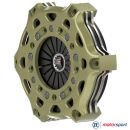


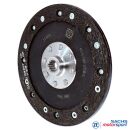
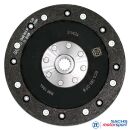

SACHS RCS 184 racing clutch, organic 7.8 mm
The SACHS RCS 184 racing clutch from ZF-Motorsport is a modular 184 mm clutch system for high-performance motorsport and trackday applications. The series combines compact design, low rotating mass, precise disengagement and a service-friendly layout. With organic friction lining, the RCS 184 is particularly suitable for vehicles where controllable torque transfer, good modulation and lower load on gearbox, differential, joints and tyres are important.
This category contains SACHS RCS 184 racing clutches with organic 7.8 mm friction discs. The designation O7.8 describes an organic clutch disc with 7.8 mm lining thickness. The organic friction lining builds torque transfer more progressively than sintered metal and is therefore a suitable choice for club racing, slalom, trackdays, historic racing cars and high-performance road cars with motorsport-derived clutch technology.
Technical variants of the RCS 184 organic series
The variants differ mainly in the number of friction discs, transmissible torque capacity and thermal reserve. More friction discs increase the effective friction area and enable higher torque transfer in a compact design. The RCS 184 organic version is designed for well-modulated torque transfer, smooth engagement behaviour and reduced shock loads in the drivetrain.
| Version | Torque capacity | Design | Technical classification |
|---|---|---|---|
| SACHS RCS 1/184-O7.8 | 441 Nm | single-plate racing clutch with 184 mm diameter | Well-modulated version with low rotating mass and progressive torque transfer |
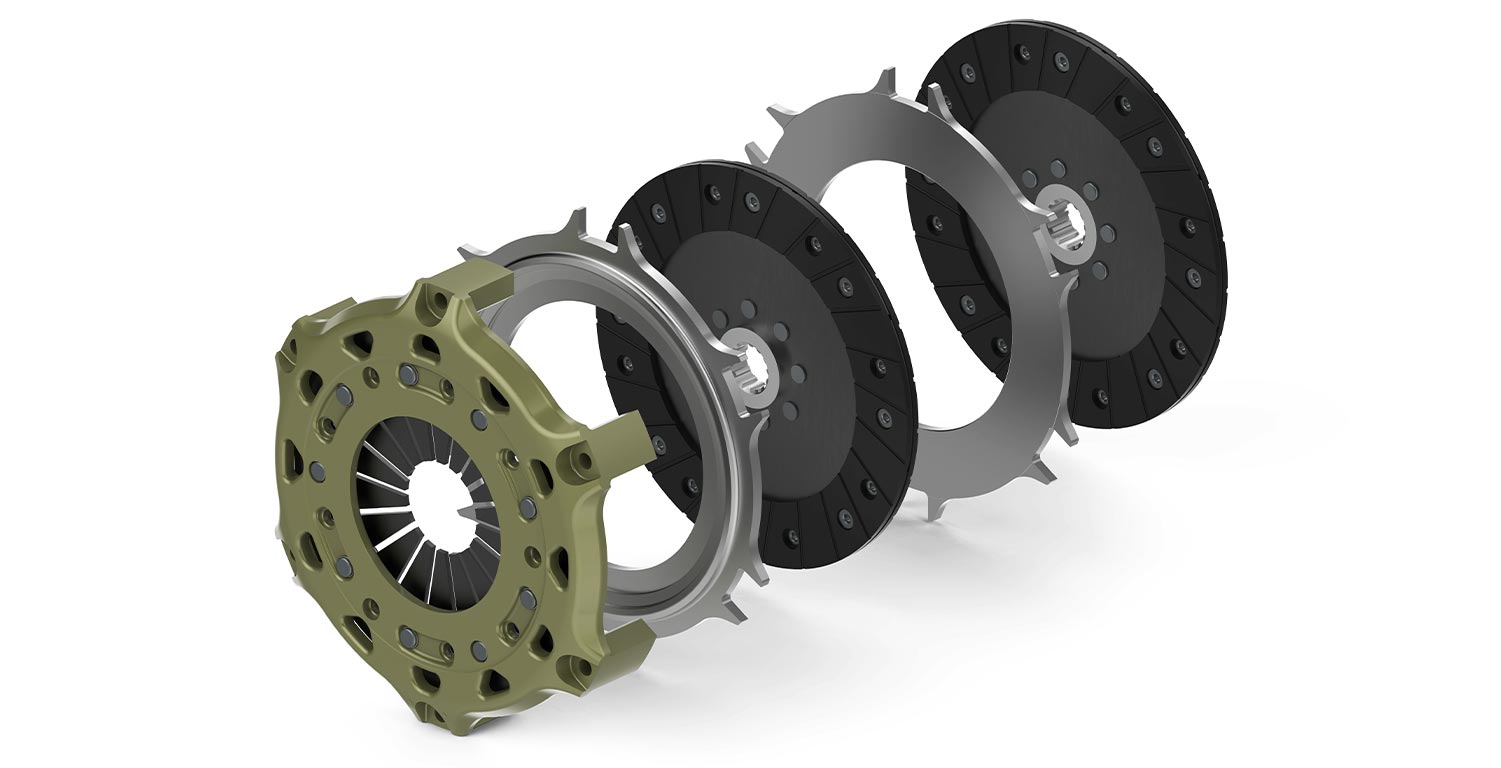
| SACHS RCS 2/184-O7.8 | 883 Nm | twin-plate racing clutch with 184 mm diameter | More friction area and higher torque capacity with organic friction characteristics |
Organic friction lining for controllable torque transfer
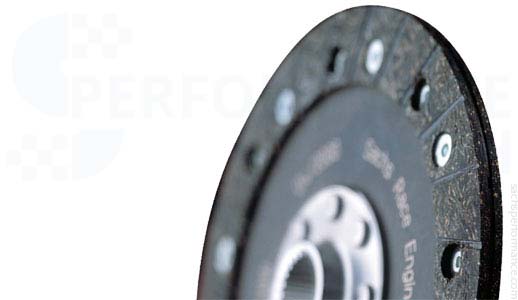
In the RCS 184 organic version, the clutch disc uses an organic friction lining. This friction lining allows softer, more progressive engagement than sintered pad or sintered metal versions. As a result, shock loads in the drivetrain are reduced, modulation is improved and the vehicle can be controlled more precisely when launching, manoeuvring in the paddock and accelerating out of slow corners.
The 184 mm size offers more friction area and thermal reserve than very small 140 mm systems, while remaining more compact and responsive than a larger RCS 200 clutch. Combined with organic 7.8 mm friction discs, it creates a balanced racing clutch for applications where drivability, traction and component protection are more important than maximum engagement aggressiveness.
Complete clutches and spare parts for SACHS RCS 184
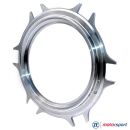
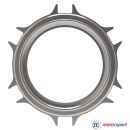
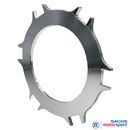
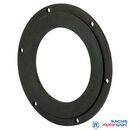
This category includes complete SACHS RCS 184 racing clutches with organic friction lining as well as matching spare and wear parts for maintenance, overhaul and rebuild. These include clutch discs, pressure plates, intermediate plates, clutch covers, adapter plates, release rings, motorsport concentric slave cylinders and further components of the modular RCS system.
In motorsport use, friction discs, pressure plates, intermediate plates and cover components are checked regularly depending on running time, thermal load and wear condition. The modular design enables targeted replacement of individual components and supports service-friendly maintenance of the clutch unit.
Advantages of the RCS 184 organic 7.8 mm version
The SACHS RCS 184 racing clutch with organic 7.8 mm friction discs combines modular RCS technology with a drivable, well-controllable friction characteristic. The organic friction lining reduces harsh load peaks, protects adjacent components and supports precise modulation of torque transfer.
Progressive torque transfer for finely modulated engagement and good drivability.
Good wear reserve and stable pressure point within the intended temperature window.
Balanced compromise of compact design, friction area and reduced inertia.
Suitable torque capacity for different power levels and applications.
Reduced shock load for gearbox, differential, joints, tyres and flywheel.
Modular RCS system for precise function, targeted maintenance and high manufacturing quality.
Applications
The RCS 184 racing clutch with organic friction lining is suitable for applications where controllable torque transfer, good traction and low drivetrain stress are the main priorities. It is less aggressive than sintered metal and is therefore particularly interesting for vehicles that are not designed exclusively for maximum launch loads and the highest disc temperatures.
- Trackdays & club racing: well-modulated engagement, stable feedback and reduced load peaks
- Slalom & hill climb: precise torque transfer during frequent load changes and controlled launching
- Historic racing cars: organic friction lining for more component-friendly torque transfer
- High-performance road cars: motorsport-derived clutch technology with better modulation than sintered metal
- Racing projects: RCS 184 clutch with organic friction characteristics and modular design
Organic, sintered pad, sintered metal or carbon: technical classification
The choice of friction material influences response, temperature resistance, wear behaviour and drivetrain load. Organic offers the softest and most easily modulated friction characteristic among typical RCS friction materials. Sintered pad and sintered metal respond more directly and withstand higher thermal loads, while carbon is used for very high temperature windows and particularly compact high-performance applications.
The RCS 184 racing clutch with organic 7.8 mm friction discs is therefore a suitable technical choice when drivability, traction and component protection are more important than maximum aggressiveness during launch. For extreme race starts, very high disc temperatures or particularly harsh sprint conditions, a sintered or carbon version may be the more suitable choice.
Technical selection: torque, friction discs and hub profile
Engine output, maximum engine torque and thermal load limit are decisive when selecting the right SACHS RCS 184 organic clutch. The stated transmissible torque describes the maximum transmissible engine torque of the respective version without an additional safety margin. Depending on application, vehicle weight, tyre grip, gearing, launch load, temperature development and load duration, the clutch should be sufficiently dimensioned or deliberately oversized.
A clutch that is operated permanently close to its maximum torque capacity can be subjected to higher thermal and mechanical loads. With organic friction linings, it is particularly important that the clutch is operated within the intended temperature window. For very hard starts, extreme continuous load or high disc temperatures, the technical selection should therefore be made conservatively.
In addition to torque capacity, flywheel, release system, release travel, installation height and the correct hub profile for the gearbox input shaft are decisive. Depending on the variant, the RCS 184 organic versions are designed for stepped flywheels and different release diameters. Only when these parameters match the entire drivetrain precisely will torque transfer, disengagement behaviour and durability function reliably.
Frequently asked questions about the SACHS RCS 184 organic clutch
What does O7.8 mean for the SACHS RCS 184?
O7.8 designates an organic clutch disc with 7.8 mm lining thickness. The organic friction lining enables more progressive, better-modulated engagement and reduces harsh load peaks in the drivetrain.
Which RCS 184 organic clutches are available in this category?
This category contains SACHS RCS 184 racing clutches with organic 7.8 mm friction discs. The most important complete clutches are the RCS 1/184-O7.8 with 441 Nm and the RCS 2/184-O7.8 with 883 Nm maximum transmissible engine torque.
What is the advantage of an organic friction lining?
An organic friction lining builds torque transfer more softly and progressively than sintered metal. This allows finer clutch modulation, makes traction easier to control and places less harsh load on gearbox, differential, joints, tyres and flywheel.
What is the difference between organic and sintered pad?
Organic is easier to modulate and gentler on the drivetrain. Sintered pad responds more directly, is more aggressive in torque transfer and withstands higher thermal loads. Organic is therefore better suited to controllable drivability, while sintered pad offers advantages with higher temperature peaks and harder motorsport launches.
What is the difference between RCS 1/184-O7.8 and RCS 2/184-O7.8?
The RCS 1/184-O7.8 is a single-plate racing clutch with 441 Nm maximum transmissible engine torque. The RCS 2/184-O7.8 has two friction discs and increases torque capacity to 883 Nm. The second friction disc increases friction area and thermal reserve.
Are individual spare parts available for the SACHS RCS 184 organic?
Yes, individual spare and wear parts are available for the RCS 184 organic. These include clutch discs, pressure plates, intermediate plates, clutch covers, adapter plates, release rings, motorsport concentric slave cylinders and further components of the modular RCS system.
What matters when making the technical selection?
The decisive factors are engine torque, thermal load, application, flywheel type, release system, release travel, installation height and hub profile. The stated transmissible torque should be understood as a maximum value without an additional safety margin.